1 click
To install the template

Incident tracking
Manage incidents, concerned contacts, impacted equipment, interventions, and corrective actions in a structured application designed to accelerate resolution and ensure reliable operational tracking.
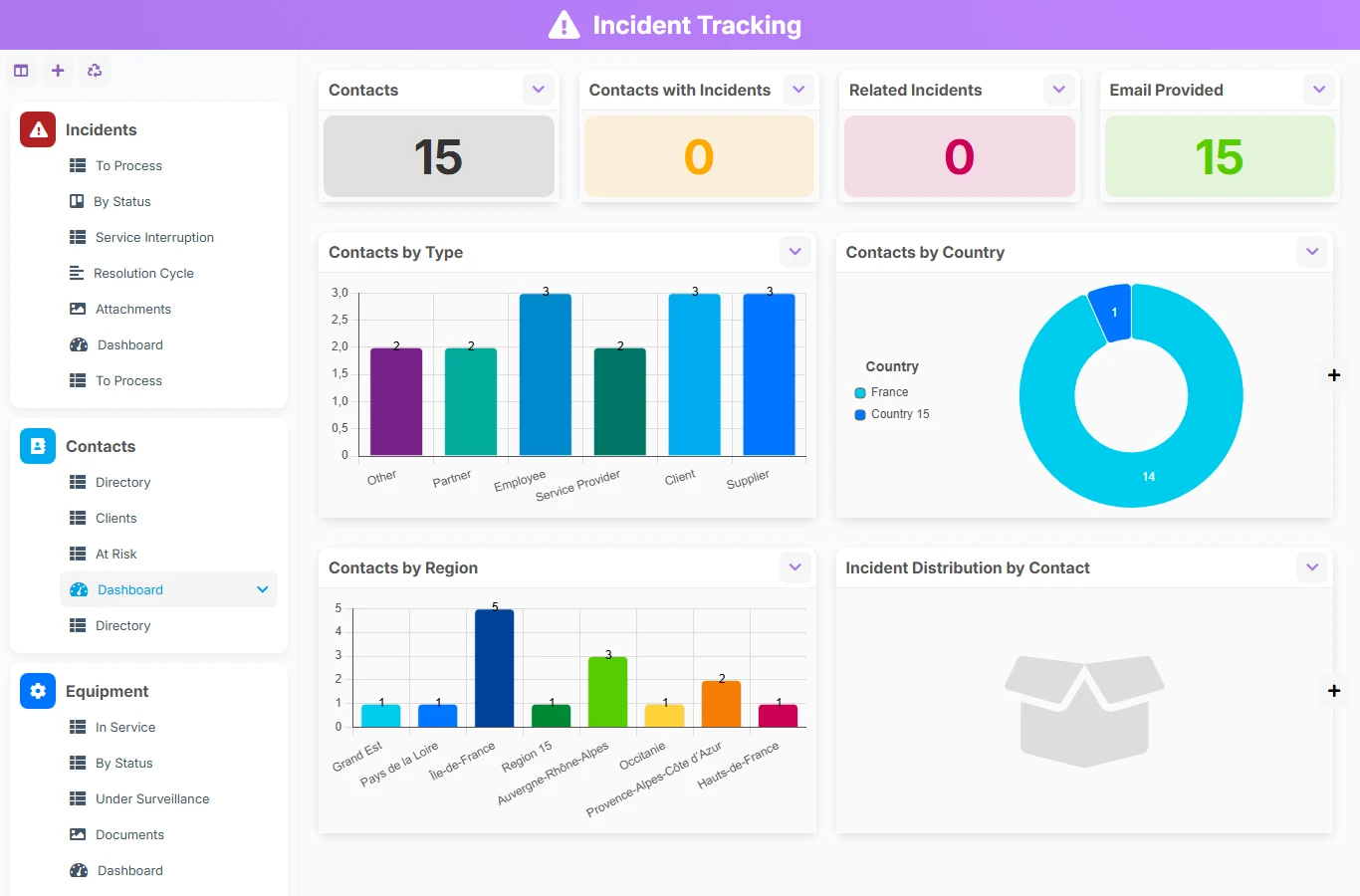
Without a shared tool, an incident can quickly get lost among emails, files, and informal exchanges. This AirProcess template gathers declarations, responsibilities, attachments, and follow-ups in one space. You track the real impact, link each incident to the right contacts and equipment, and transform each event into a traceable intervention or corrective action.
1 click
To install the template
5
ready-to-use forms
100%
Customizable without development
France
Technology and hosting
Central record to describe the event, measure the impact, track the status, and initiate operational follow-ups.
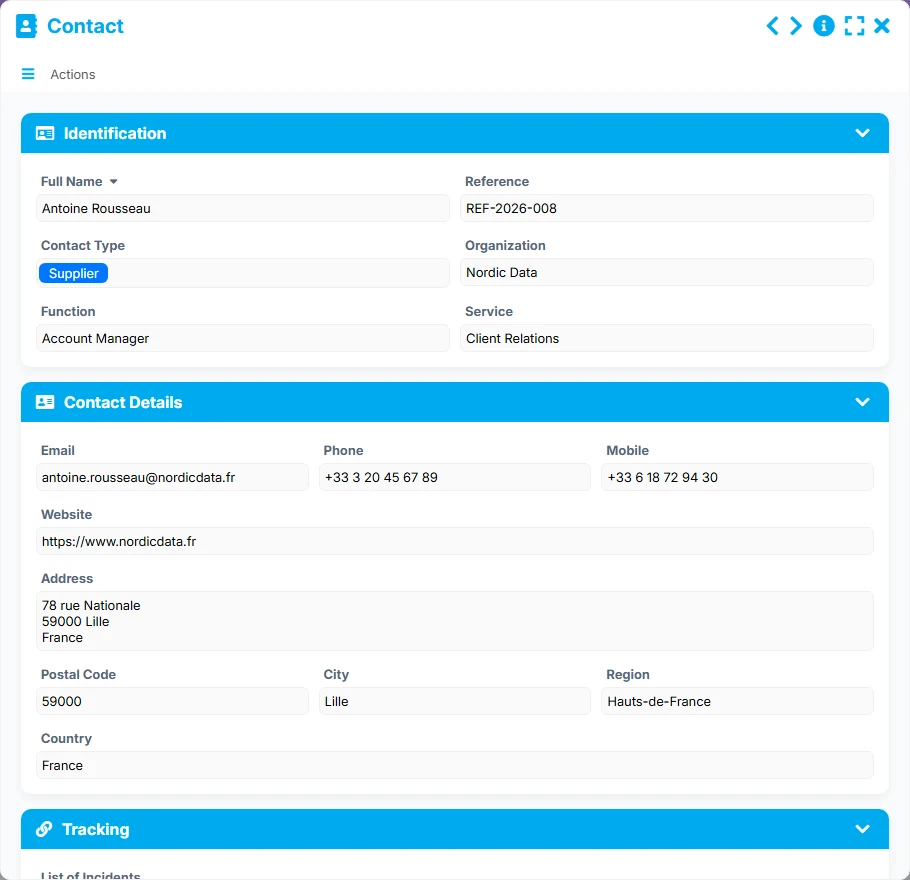
Directory of concerned individuals, clients, internal contacts, or stakeholders related to incidents.
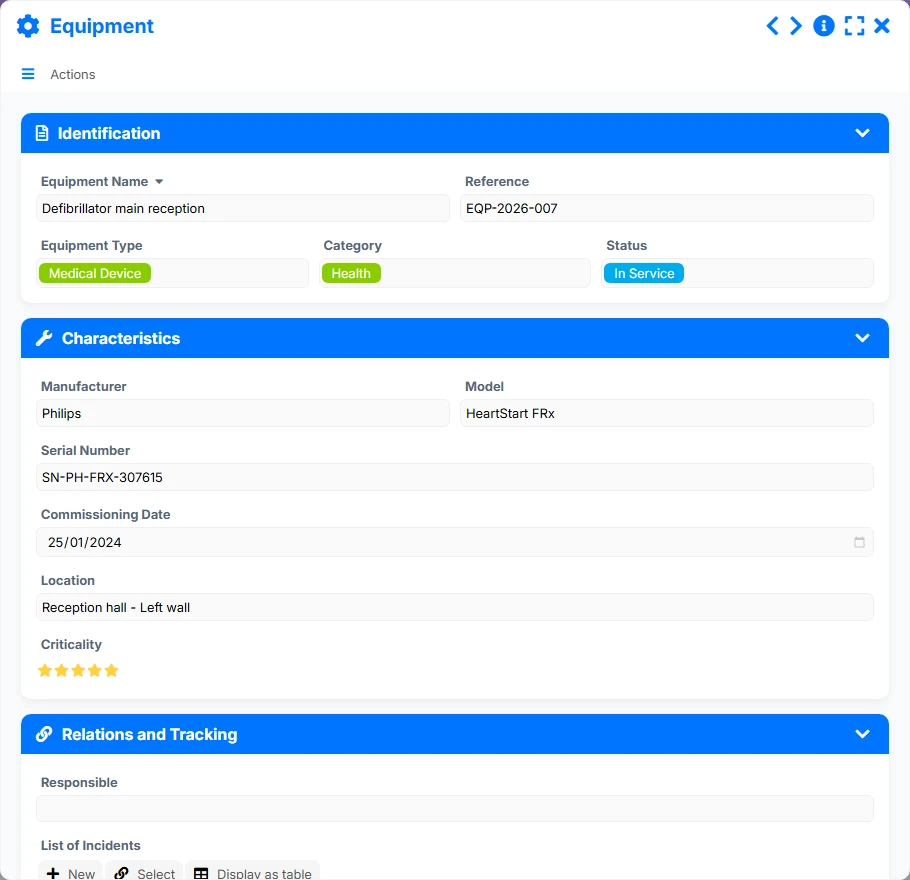
Register of assets or machines involved in incidents, along with their characteristics and history.
Organization of planned or executed actions to diagnose, repair, or restore service.
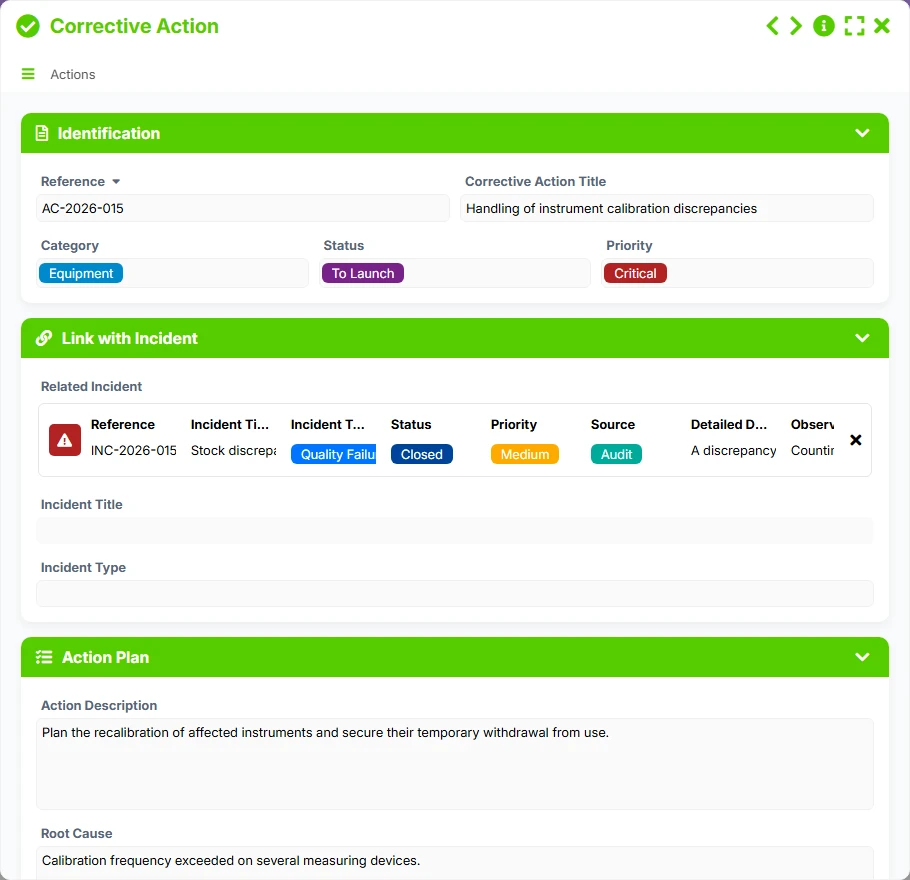
Tracking of sustainable measures aimed at addressing the root cause and preventing recurrence of incidents.
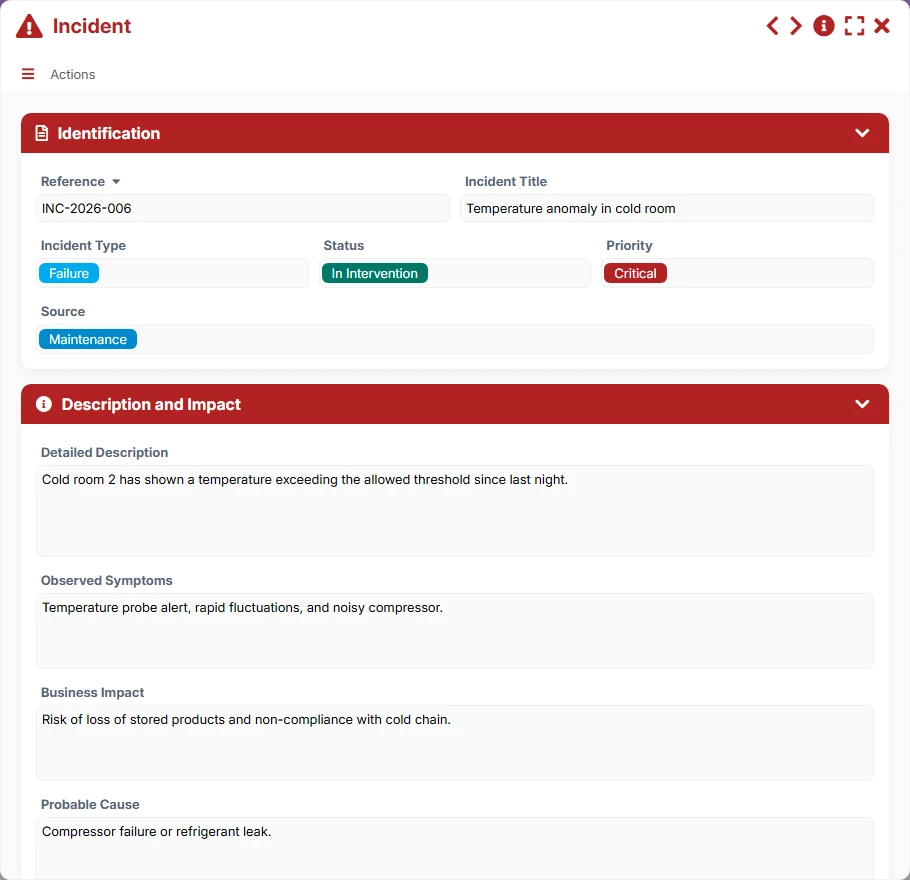
Record the reference, type, priority, source, description, symptoms, business impact, and probable cause to accurately qualify each incident.
Associate each incident with a concerned contact to centralize exchanges, find key interlocutors, and maintain relational history.
Link incidents to impacted equipment to identify recurrences, asset criticality, and sensitive areas.
Structure the transition from observation to execution through planned interventions and corrective actions related to the source incident.
Utilize lists, kanbans, calendars, timelines, galleries, and dashboards to track incidents to be addressed, deadlines, monitored equipment, and overdue actions.
The template follows a simple operational logic: declare the incident, link it to the right contact and equipment, then organize interventions and corrective actions until closure. The relationships between forms prevent duplicates and allow for a complete view of the handling.
The Incident form gathers essential information from the outset: title, type, priority, status, declaration date, detailed description, symptoms, business impact, and probable cause.
Each incident links to a concerned Contact and a concerned Equipment. This relationship allows incidents to be consolidated by interlocutor, site, or asset, without unnecessary re-entry.
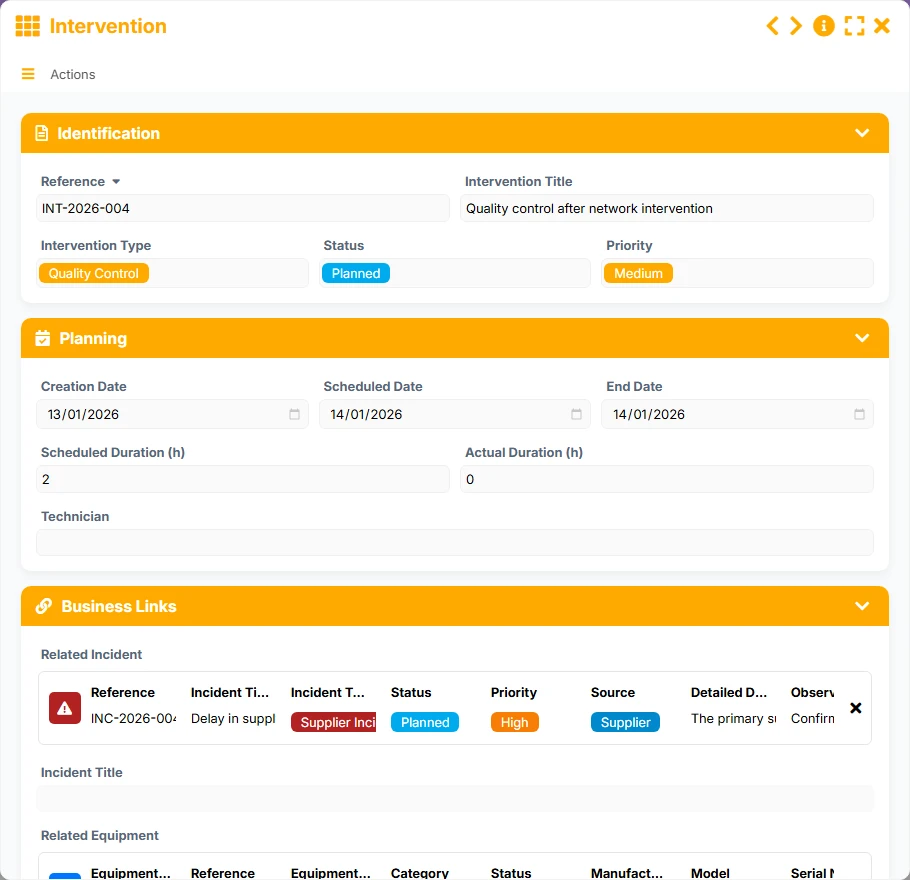
The incident can reference multiple Interventions. We then prepare the title, type of intervention, priority, expected date, duration, and report to track execution and results.
Each Corrective Action is linked to the source incident. You can document the category, status, priority, action description, and root cause, then verify the effectiveness of the measures taken.
The views to be addressed, by status, resolution cycle, planning, upcoming deadlines, and dashboards provide an immediate reading of critical incidents, ongoing interventions, and unresolved actions.
All forms offered in the app templates are editable and adjustable to your business, as well as the colors and layouts.
Structure incident tracking without complex tools and maintain a clear history of problems, interventions, and corrective actions.
Unify incident handling across multiple teams, sites, or scopes to better manage deadlines, responsibilities, and recurring causes.
Centralize reports, interventions, and corrective measures in a readable and shareable framework between services.
Track incidents related to equipment, operations, or field interventions with simple and collaborative traceability.
Yes. The Incident form serves as an entry point, and the relationships to interventions and corrective actions allow tracking the handling until closure and feedback.
Yes. The template provides for a concerned contact and a concerned equipment, which facilitates tracking responsibilities, impacts, and affected assets.
They serve to prioritize daily work, visualize progress, identify urgent incidents, and track progress over time.
Yes. Interventions cover operational execution, while corrective actions aim to sustainably address the root cause and reduce recurrences.
Yes. The fields for type, priority, source, impact, and status allow managing various incidents within the same framework without losing clarity.
Yes. The relationships between incidents, contacts, equipment, interventions, and corrective actions provide a solid foundation for coordinating multiple actors around the same tracking.
Start with a ready-to-use application to declare incidents, mobilize the right interlocutors, plan interventions, and track corrective actions without losing information.
Here is what our clients say
Companies of all sizes and sectors that have optimized their operations with Airprocess